



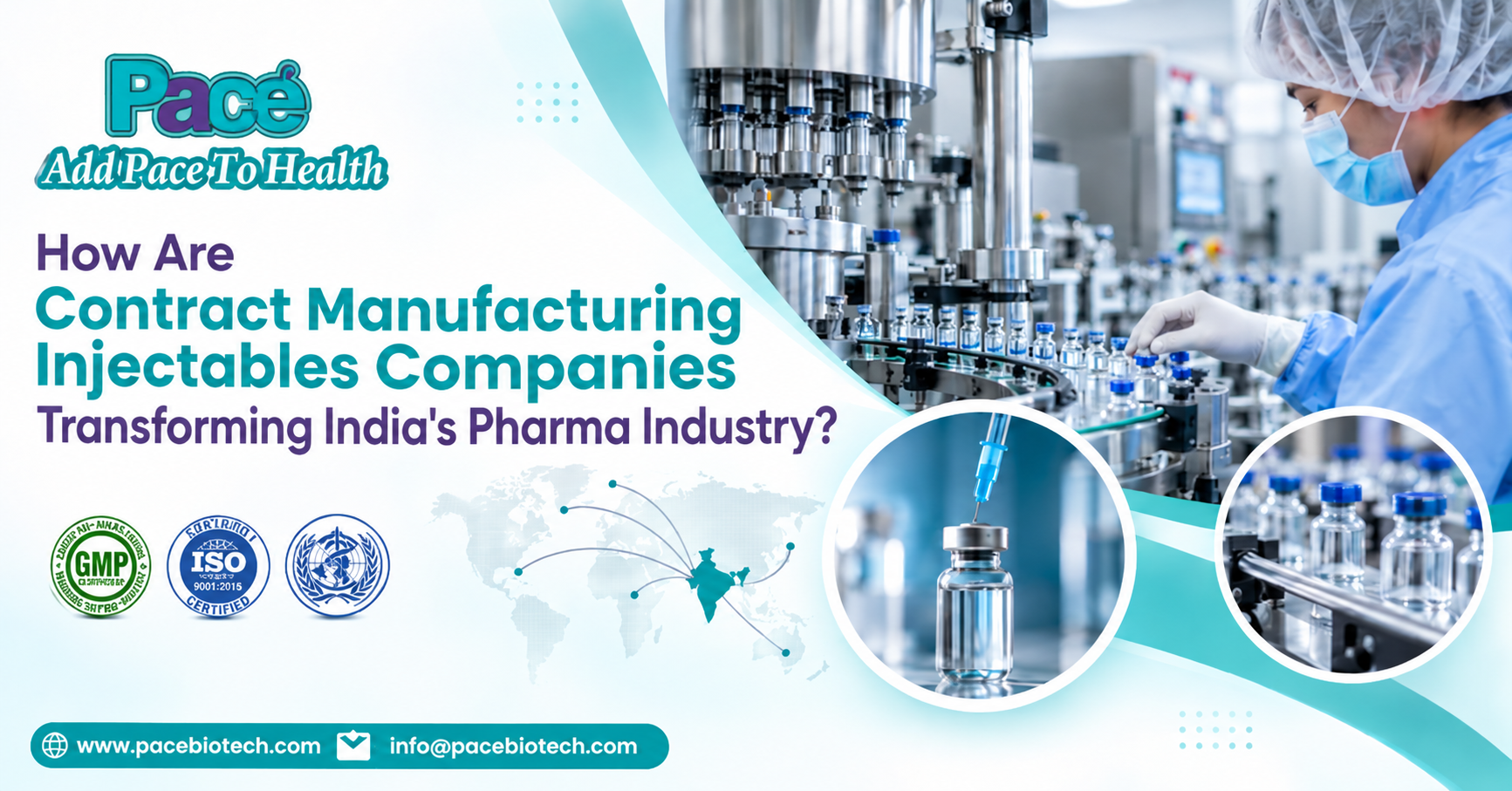
This contract manufacturing injectables company helps pharmaceutical companies manufacture injectables that are sterile without spending money on developing production plants. For instance, these contractors deal with sterile compounding, aseptic filling, and lyophilization for the development of pharma companies. India’s entire pharmaceutical industry has breached the mark of Rs 4.71 lakh crore in annual turnover from just generic injectables, which have reached Rs 30,000 crore.
This enables firms to bring critical care pharmaceuticals to market faster by outsourcing sterile manufacturing, while paying only Rs 1.5 lakh to Rs 15 lakh per batch. Therefore, innovative third-party alliances are transforming healthcare production across India.
How Are Contract Manufacturing Injectable Companies Strengthening Pharmaceutical Manufacturing Industry In India?
Emerging and established healthcare companies can overcome huge capital constraints by outsourcing the manufacture of sterile drugs. Also, working with an experienced injectable contract manufacturer in India helps speed up market access for critical care, cancer, and anti-infective medications. This enables local pharma businesses to grow their product range efficiently, while ensuring stringent clinical quality.
Reduction in Capital Expenditure
The cost of building WHO-GMP sterile injectable plants is between Rs 40 crore and Rs 80 crore. Pharma companies can invest just 2 lakh to 10 lakh rupees per batch through outsourcing. So businesses will use their savings in doctor marketing and expanding distribution.
Faster time-to-market
New sterile facilities require about three years to get approved by regulators. But working with a ready contract manufacturing injectables company decreases the launch dates to 45 days. Thus, pharma marketers may quickly grab seasonal hospital demand and not miss market openings.
Technology Access for Specialized Needs
Modern parenteral medicines require complicated lyophilization, pre-filled syringes, and isolator filling lines. In contrast, the pricey machinery is operated by specialist contract plants under certified conditions. This has resulted in smaller firms providing complex formulas used in hospitals without the ownership of technological apparatus.
Ensuring Regulatory Compliance
Sterile Injectables are under intense examination by CDSCO, WHO-GMP, and International Auditors. The good news is that trusted manufacturing partners have their own quality assurance teams and verified cleanrooms. That means no costly batch recalls for marketing corporations and instant trust from hospital procurement boards.
Production Volumes that Scale
Demand on hospitals varies greatly during monsoon diseases and seasonal epidemics. Hence, third-party facilities may scale up batch sizes easily from 10,000 vials to 2 lakh vials. Pharma companies therefore avoid stockouts and don’t incur idle manufacturing overhead costs in the slower months.
How important are quality standards and advanced technology in injectable contract manufacturing?
Parenteral medicines should maintain high sterility requirements and automated cleanroom systems to avoid any microbial contamination. Modern technology ensures patient safety throughout the entire process of manufacturing, which is evident from a leading contract manufacturing injectables company of India.
| Quality Technology Pillar | Operational Standard Applied | Direct Benefit to Pharma Brands |
|---|---|---|
| ISO Class 5 Cleanrooms | HEPA filtered laminar flow in positive pressure zones | Eliminates dangers of airborne particle and microbiological contamination |
| Automated Aseptic Filling | Robotic, high-speed filling lines for vials, ampoules and PFS | Ensures proper dosing and no human contact exposure |
| Lyophilization Systems | Vacuum freeze-drying systems for sensitive biological substances | Extends the shelf life of sensitive antibiotics and critical care medications |
| Water for Injection (WFI) | Water loops of multi-stage distillation and ultra-filtration | Guarantees endotoxin-free liquid preparations for intravenous administration |
| Visual & Leakage Inspection | Automated optical scanners and high-voltage leak detectors | Prevention of fractured vials and particle problems before release to the market |
| GLP & WHO-GMP Labs | In-house sterility, pyrogen and HPLC analytical testing | Full Certificates of Analysis available for hospital bids |
How is the growing demand for injectable drugs opening up new opportunities for pharmaceutical companies in India?
The healthcare industry in India is growing quickly in Tier-2 and Tier-3 cities, leading to a spike in prescriptions for fast-acting parenteral medicines. Moreover, by partnering with the best injectable contract manufacturer in India, the distributors may provide life-saving medications for profit. So, entrepreneurs are bagging lucrative hospital bids with limited working capital.
- Growing private hospital chains and ICUs have an ongoing need for critical care antibiotics and anesthetic vials.
- Increasing chronic diseases and cancer cases are fueling the domestic market for oncology injectables and biosimilar monoclonal antibodies.
- The government healthcare plans and the Jan Aushadhi procurement tenders spend thousands of crores per year on inexpensive generic injections.
- Having a reputable contract manufacturing injectables company means that regional marketers may set up monopolistic hospital divisions at the cost of 3 lakh rupees.
- Global export orders are rising from Africa, Southeast Asia and Latin America, giving Indian sterile manufacturers high-margin foreign contracts.
Why should you Choose Pace Biotech for Reliable Contract Manufacturing Injectable Services in India?
Your brand’s clinical reputation and supply chain stability will hinge on picking an experienced sterile partner. Also, a reputed injectable contract manufacturer in India combines contemporary infrastructure with clear batch execution. So, here are five key advantages of using Pace Biotech for your parenteral portfolio.
WHO-GMP Certified Plant
Pace Biotech has advanced sterile facilities in Himachal Pradesh, adhering to rigorous WHO-GMP and ISO requirements. Furthermore, beta-lactam, general liquid, dry powder and lyophilized injections are securely manufactured in separate manufacturing blocks. Your brand is thereby benchmarked for parenteral formulations worldwide.
Therapeutic Portfolio, diverse
The injectable contract manufacturer in India specializes in critical care, anti-infectives & ophthalmics with over 300 authorized formulas and 20 years of competence. Also, the clients pick liquid vials, ampoules, dry injections and pre-filled syringes. So marketers create whole hospital catalogs under one roof.
Quality Testing (Rigorous)
Each batch is tested for microbiological, sterility, endotoxin and HPLC stability in approved in-house laboratories. In addition, professional quality assurance specialists are constantly monitoring raw materials and packaging components. As such, completed injections are always subject to rigorous institutional and hospital audits.
Batch Cost Economics
We can offer competitive manufacturing quotations from Rs. 1.5 lakh to Rs. 8 lakh per batch with effective supply chain sourcing. The customer also gets to safeguard their bottom line with straightforward charging and no hidden expenses. This is why startups and big pharma firms sustainably expand their injectable divisions.
On-Time Pan-India Delivery
With a trusted injectable contract manufacturer in India like Pace Biotech, you are guaranteed the fastest response time and dependable cold-chain logistics in 1,500+ locations across India. Furthermore, doctors are more likely to remember the brand if the package is appealing and custom-designed and the labeling is legible. So, during the busiest seasons, the hospital supplies are kept constant by wholesalers.
Conclusion
Ultimately, all the major contract manufacturing injectables company players are making India a global hub for inexpensive life-saving parenteral pharmaceuticals. Pharma firms may bring critical care, lyophilized and specialized injections to market faster without having to invest in huge factories by using third-party sterile production.
Yet clinical effectiveness is absolutely dependent on cleanroom cleanliness and regulatory accuracy. Partnering with Pace Biotech, one of the most reputable injectable contract manufacturer India, assures your brand quality that is WHO-GMP certified, transparent pricing starting from 1.5 lakh rupees.
What Our Clients Say
Dr. Rajeshwar Sharma, Director, Critical Care Pharma, Chandigarh
“Our partnership with Pace Biotech allowed us to launch our portfolio of ICU antibiotics in just 50 days, without the need for huge capital investment. “Their crisp batch documentation and sterile facility with WHO-GMP certification helped us easily win major hospital supply tenders.”
Meenakshi Iyer, Institutional Healthcare Distributor (Chennai)
“Zero particulate defects and strict cold-chain dispatch make all the difference when you are supplying tertiary hospitals. Partnering with an established injectable contract manufacturer lent immense credibility to our brand among intensivists and surgeons across South India.”
Vikramaditya Deshmukh, Pharma Startup Founder (Pune)
“We had been finding it financially overwhelming to start an injectable division until we started exploring third-party manufacturing with Pace Biotech. “Transparent batch pricing, custom Alu-flip packaging and dedicated regulatory support took our modest initial investment and turned it into a profitable regional business.”
Anand Vardhan, Head Export Division, Ahmedabad
“International purchasers expect rigorous conformance to pharmacopeial standards and full stability data for lyophilized vials. Our manufacturing partner provided great analytical records and sterile quality that sped up our product registrations in three outside marketplaces.
Frequently Asked Questions FAQs
Why do beta lactam injections need fully different blocks of production?
Separate HVAC and production blocks preclude cross-contamination, which might otherwise pose a risk of hazardous responses to patients with strong penicillin or cephalosporin allergies.
How does lyophilization improve unstable injectable antibiotics?
The process removes water under vacuum conditions at low temperature, making fragile molecules chemically stable for up to 24 months.
What is the difference between Terminal Sterilization and Aseptic Processing?
Terminal sterilization heats sealed vials to kill microorganisms, while aseptic processing involves filling pre-sterilized solutions in clean rooms.
Why are the blow-fill-seal (BFS) ampoules replacing the conventional glass ampoules?
BFS plastic ampoules avoid the risk of glass particles when snapped and also minimize breakage losses during transportation over large distances in hospitals.
What is the minimum batch size generally accepted by Indian injectable contract manufacturers?
Most third-party facilities have minimum batches of 10,000 to 25,000 vials, which cost from Rs 1.5 lakh to Rs 5 lakh.
How do manufacturers screen for bacterial endotoxins in injectables before release?
All batches are tested using the Limulus Amebocyte Lysate (LAL) method in quality control laboratories to ensure that there is no presence of pyrogens that can cause fever in the patient.
Why are pre-filled syringes very popular in emergency wards in India?
Pre-filled syringes avoid manual errors, reduce the risks of needle sticks, and save precious time in life-saving situations.
What is the required documentation to schedule third party injectable production in India?
Pharma brands are required to provide a valid wholesale medicine license, GST registration, a no-similarity brand certificate and an approved trademark application.
What is the role of nitrogen purging in protecting oxygen-sensitive liquid injections?
Flushing of the vial headspace with pure nitrogen gas displaces oxygen and prevents oxidation of the active ingredient and solution discolouration during storage.
What are the best hub locations in India for sterile injectable manufacturing?
Himachal Pradesh, Uttarakhand and Gujarat are India’s top performers in terms of trained technical people, dependable power and strong pharma ecosystems.