ssssmain-logoo.png)



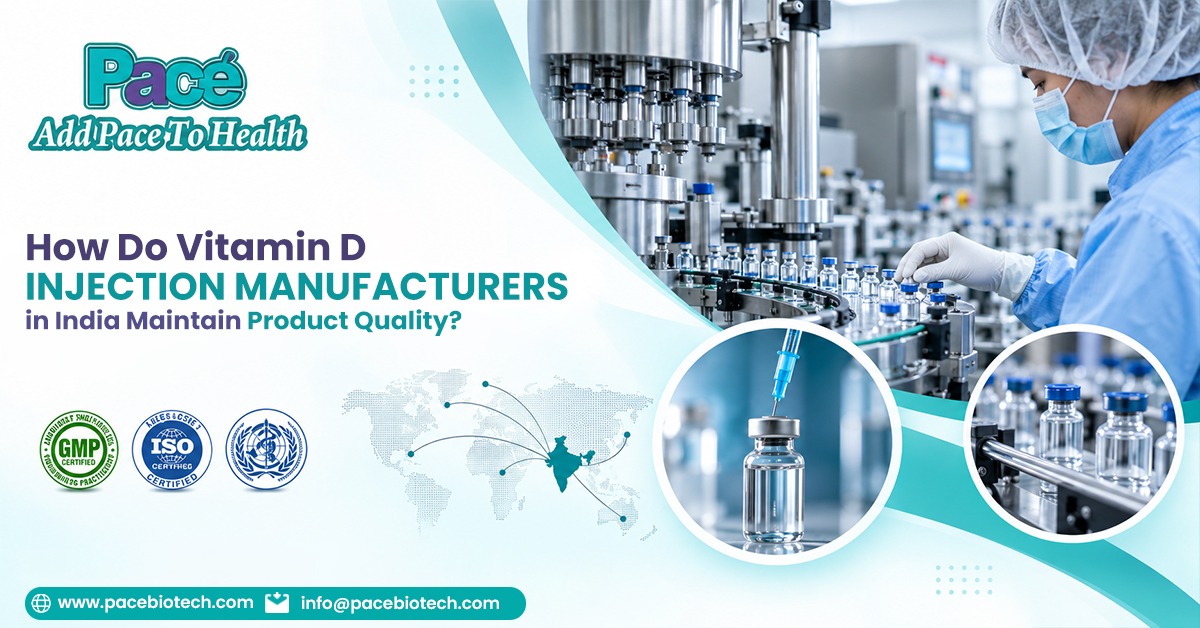
The premium vitamin D injection manufacturers in India assure 100% purity through controlled terminal sterilization and a sterile liquid filling process. Parenterals do not undergo any digestive process; hence, the batch sterility needs to be maintained at 100%. Furthermore, the authorized manufacturing plants have automated Class A cleanrooms for complete protection against any kind of microbial contamination. Thus, Indian manufacturers adhere to Central Drugs Standard Control Organization (CDSCO) guidelines and WHO-GMP standards.
The creation of a licensed contract facility demands an investment of 25 lakh to 1 crore in sterile processing and air filtration units. As such, quality assurance ensures batch integrity, prolongs shelf life, and provides highly potent, one-time, intramuscular supplements throughout India.
What Quality Standards Do Vitamin D Injection Manufacturers in India Follow?
- GMPs of WHO ensure the complete environmental hygiene of the filling lines.
- A CDSCO license ensures the efficiency and physiological safety of raw active substances.
- ISO 9001:2015 standards ensure complete traceability of the processing of raw materials.
- Licensed vitamin D injection manufacturers in India perform continuous bio-burden testing of finished ampoules.
- USP and IP monograph standards define exact limits of active vitamins in every batch.
How Is Quality Control Managed During Vitamin D Injection Manufacturing?
1. Testing Raw Materials
High-quality Vitamin D Injection supplied by a reliable vitamin D injection 15mg/ml supplier in India gets tested for the purity of active cholecalciferol through the HPLC testing process. Oily bases get tested for their rancidity and peroxide value for long-term stability. Testing the raw material at the very beginning saves a lot of money as well as ensures that there will be therapeutic efficacy.
2. Control of HEPA-Filtered Cleanroom
Liquid filling is done in ISO class 5 cleanrooms with continuous HEPA filtration units. Such air handling units are particularly designed to produce laminar flow to maintain the sterility of open glass ampoules during the filling operation. An automatic pressure differential system is used to ensure that no outside air can get into the filling bay.
3. Terminal Sterilization Testing
Each batch is sterilized in the validated superheated water spray autoclave after the liquid filling process. Temperature sensors control the temperature level and ensure even heat distribution for killing all resistant bacteria spores. After the heat treatment, each batch undergoes obligatory 14-day direct inoculation media culture testing to check the absence of microbes.
4. Nitrogen Blanketing Safety
Fat-soluble cholecalciferol gets destroyed easily under the influence of atmospheric oxygen and loses its therapeutical efficacy and shelf life. Top vitamin D injection manufacturers in India utilize the process of nitrogen purging in an automated manner just prior to the process of heat sealing in order to protect the active ingredient from oxidation.
5. Automated Optical Inspection
The high-speed camera vision system checks the ampoule for any particulate matter, glass hairline cracks, and correct fill volume. Units with cosmetic defects, wrong seal geometry or any foreign objects are automatically eliminated from the line by high speed air jets. Such multi-camera inspection guarantees only flawless and fully compliant ampoules reach the packaging line.
Which Manufacturing Practices Help Ensure Consistent Vitamin D Injection Quality?
| Quality Control Parameter | Technical Standard & Process | Commercial Investment / Unit Cost |
|---|---|---|
| Active Molecule Testing | High-Performance Liquid Chromatography (HPLC) | Liquid: ₹15,000 to ₹25,000 per batch test |
| Environmental Control | ISO 5 / Class A HEPA Laminar Air Flow Systems | ₹10 lakh to ₹30 lakh setup cost |
| Primary Packaging | Type-1 Amber Glass (Light Protection) | ₹2 to ₹5 per glass ampoule |
| Sterility Validation | 14-Day Direct Inoculation Media Culture Testing | ₹8,000 to ₹12,000 per release lot |
| Contract Batch Production | Third-party manufacturing of Vitamin D3 Injection 6,00,000 IU per manufacturer lines | ₹85 to ₹120 per pack MRP |
How Can Pace Biotech Support Quality Vitamin D Injection Manufacturing?
1. Infrastructure of WHO-GMP certified plant
Pace Biotech, a premier vitamin D injection manufacturing company, employs WHO-GMP certified sterile parenteral production lines. The plant has the automated wash tunnel, depyrogenation and liquid filling lines in order to reduce human touch and avoid contamination. Modern production lines will enable the distributors to manufacture high-quality injectables.
2. High Dose Specific Features
As an experienced vitamin D3 injection 6,00,000 iu manufacturer, Pace Biotech manufactures oil preparations in high concentrations with the highest accuracy. Special heating and solubilization tanks are used to ensure homogenous distribution of the active substance in the oily vehicle. It helps to prevent settling of the active substance and provide the right dose of each batch.
3. Advanced Nitrogen Packaging
Pace Biotech integrates automated dual-stage nitrogen purging technology in their high-speed sealing lines. Oxygen level inside ampoule headspaces stays lower than 1% and provides the protection of active substance from oxidation. It helps to maintain the liquid’s color, viscosity and therapeutic potency during the whole shipment and storage period.
4. Flexible Contract Manufacturing
The collaboration with a reliable vitamin D injection manufacturing company like Pace Biotech will provide opportunities for distributors to get third-party contract manufacturing facility. The flexible nature of the manufacturing facility suits both trial and large-scale production and requires an initial investment of between 1.5 lakh to 3.5 lakh. This arrangement will assist new pharmaceutical companies in manufacturing their products without incurring much capital in machine purchases.
5. National Distribution Process
Pace Biotech has an organized distribution process that sends out the final production batches in about 10-15 business days. As a reliable vitamin D injection 15mg/ml supplier in India, Pace Biotech uses insulated and shock-proof master cartons for shipping its products to avoid damage. Their organized dispatch system helps partners to keep steady inventory levels and avoid hospital stockouts.
The Bottom Line
Maintaining the therapeutic quality demands WHO-GMP certified cleanrooms, advanced HPLC raw material assays and nitrogen-blanketed primary packaging. The modern facilities that are run by the best vitamin D injection manufacturers in India employ methods such as automated optical inspection and terminal heat sterilization. This will ensure the complete safety of their patients.
With cooperation from Pace Biotech, there is access to facilities of the highest caliber, protection in the form of amber glass packaging & delivery throughout the country. Investing an initial amount of 1.5 lakh to 3.5 lakh for manufacturing through a third party ensures the creation of high-potency DCGI-approved parenteral lines by pharma companies.
Frequently Asked Questions
Q1. Why do manufacturers use amber glass ampoules for Vitamin D3 injections?
Ans. Amber glass protects light-sensitive cholecalciferol from UV degradation and ensures chemical stability and long shelf life of the product.
Q2. What is the standard shelf life of oil-based Vitamin D injections?
Ans. The most licensed manufacturers provide a 24-month shelf life of oil-based vitamin D injections that are protected from light conditions and lower than 25°C.
Q3. What licenses are mandatory for distributing Vitamin D injections in India?
Ans. A valid wholesale drug license and GST registration are the required legal permits to purchase, store and sell parenteral formulations in India.
Q4. How does nitrogen purging protect liquid injectable formulations?
Ans. Nitrogen gas displaces oxygen in ampoule headspaces and prevents chemical oxidation of active vitamin.
Q5. What is the typical minimum order quantity for third-party injection production?
Ans. Third-party manufacturing contract starts from 5,000 to 10,000 ampoules per production batch.
Q6. Why are oily bases used for high-dose Vitamin D injections?
Cholecalciferol is a fat-soluble molecule and a refined vegetable or sesame oil base helps its smooth intramuscular absorption and sustained release.
Q7. How do cleanrooms maintain sterile air during liquid filling?
Ans. Facilities use HEPA filtration units, which constantly recirculate clean air and remove 99.97% of micro-particles down to 0.3 microns.
Q8. What quality tests must a batch pass before commercial dispatch?
Ans. Each batch passes strict sterility testing, bacterial endotoxin limits (LAL assay), assay content uniformity and optical particulate checks.
Q9. How much time is required for contract manufacturing of pharma batches?
Ans. The typical process of contract manufacturing requires 10 to 15 business days for testing of raw materials, sterile filling, packaging and approval.
Q10. What profit margins do distributors earn on Vitamin D injections?
Ans. Pharma distributors can expect to receive gross profit margins between 35% and 55% due to high clinical demand among orthopedic hospital networks.
Contact Details:
Company Name: Pace Biotech
Address: Nahan Road, Vill. Surajpur,
Paonta Sahib, Distt. Sirmour (H.P)-173001, INDIA
Phone No.: +91-9896401911
Email Id: info@pacebiotech.com